Clear Appearance
Invisalign aligners are transparent and generally less noticeable than metal brackets and wires.
Invisalign clear aligners and traditional braces can both help straighten teeth, but they differ in appearance, comfort, convenience, cleaning, eating, and the types of cases they may be able to treat.
Choosing between Invisalign and traditional braces is not simply a matter of deciding which one looks better. Your bite, the position of your teeth, the amount of movement needed, your oral health, and your ability to follow treatment instructions all matter.
Invisalign uses a series of removable, clear aligners to gradually move the teeth. Traditional braces use brackets and wires that remain attached to the teeth throughout treatment.
The best choice depends on your individual case.
Dr. Edward Dominguez can evaluate your smile and explain whether Invisalign may be appropriate for your needs. Patients requiring treatment beyond the capabilities of clear aligners may be advised to consider traditional orthodontic treatment.
Invisalign is an orthodontic treatment that uses a planned sequence of clear, removable aligners. Each aligner is designed to guide the teeth through a portion of the prescribed movement.
Invisalign aligners are transparent and generally less noticeable than metal brackets and wires.
The aligners can be removed for meals, brushing, flossing, and certain important occasions.
A series of aligners is created to move the teeth gradually according to the treatment plan.
The aligners do not use metal brackets or wires, although temporary pressure or tenderness may occur as teeth move.
Because the aligners are removable, successful treatment depends on wearing them consistently according to instructions.
Progress visits allow the dentist to evaluate tooth movement and determine whether treatment is proceeding as planned.
Traditional braces use brackets attached to the teeth and an orthodontic wire that applies controlled force. Adjustments are made over time to guide the teeth into new positions.
Because braces remain attached to the teeth, they do not depend on the patient remembering to put an appliance back in after meals. They can also give the treating provider direct control over certain types of complex movement.
Braces require careful cleaning around the brackets and wires. Patients may also be advised to avoid foods that can bend wires, loosen brackets, or become difficult to remove.
A complete examination is necessary before determining which treatment approach is appropriate.
The following comparison explains common differences. Individual experiences and treatment recommendations vary.
| Consideration | Invisalign Clear Aligners | Traditional Braces |
|---|---|---|
| Appearance | Clear aligners are generally less noticeable when worn. | Brackets and wires are visible, although appliance styles can vary. |
| Removability | Aligners are removable for eating, brushing, and flossing. | Braces remain attached to the teeth until treatment is complete. |
| Eating | Aligners are removed before meals, so there are generally fewer appliance-related food restrictions. | Hard, sticky, or chewy foods may need to be avoided to protect brackets and wires. |
| Cleaning | Patients can brush and floss after removing the aligners. The aligners must also be cleaned. | Brushing and flossing require extra care around brackets, wires, and other components. |
| Comfort | Aligners have smooth surfaces, but pressure and temporary tenderness can occur as teeth move. | Brackets or wires may sometimes irritate the lips or cheeks, especially after placement or adjustment. |
| Responsibility | Patients must wear the aligners consistently and avoid losing or damaging them. | Because braces are fixed, patients do not have to remember to wear an appliance. |
| Treatment Range | Invisalign may treat many mild, moderate, and selected more involved cases, depending on the clinical situation. | Braces may be recommended for certain complex movements or bite corrections. |
| Lifestyle | Aligners may appeal to adults and teens who want a discreet, removable treatment option. | Braces may appeal to patients who prefer a fixed treatment that does not rely on daily wear compliance. |
Invisalign may be considered for patients with a range of alignment concerns, but candidacy depends on the teeth, bite, oral health, and complexity of the necessary movement.
Clear aligners may help create space and improve alignment in selected cases involving crowded or overlapping teeth.
Invisalign may be used to close certain gaps and create more balanced spacing.
Many patients with mild or moderate alignment concerns may be evaluated for clear aligner treatment.
Invisalign may be able to address certain overbite, underbite, crossbite, or open-bite concerns, depending on severity.
Active decay, gum disease, or other dental problems may need to be treated before beginning orthodontic movement.
Because aligners are removable, patients must be willing to wear them consistently and follow care instructions.
During your evaluation, Dr. Edward Dominguez will review your alignment concerns, bite, oral health, treatment goals, and the type of changes you would like to make.
The purpose of the consultation is to determine whether Invisalign appears suitable for your case and to explain the responsibilities involved in clear aligner treatment.
If traditional braces or specialist orthodontic care would be more appropriate, that can be discussed as part of the evaluation.
One of the main differences between Invisalign and braces is that Invisalign aligners can be removed. This can make meals and oral hygiene more familiar, but it also creates added responsibility.
Invisalign treatment depends on the aligners being worn as prescribed. Frequently removing them for long periods may delay progress or prevent the teeth from tracking according to the plan.
Patients should follow the specific wear and care instructions provided during treatment.
The cost and timeline of orthodontic treatment depend on the complexity of the case, the amount of tooth movement required, the treatment approach, and the need for additional care.
A simple alignment concern may require less treatment than a case involving significant crowding or bite correction.
Treatment time varies according to the necessary movement and how the teeth respond.
With Invisalign, wearing the aligners consistently is an important part of staying on schedule.
Existing dental concerns may need to be addressed before or during orthodontic treatment.
Some Invisalign cases may require additional aligners to refine the final tooth positions.
An individual evaluation is the most reliable way to understand treatment recommendations, timing, and financial considerations.
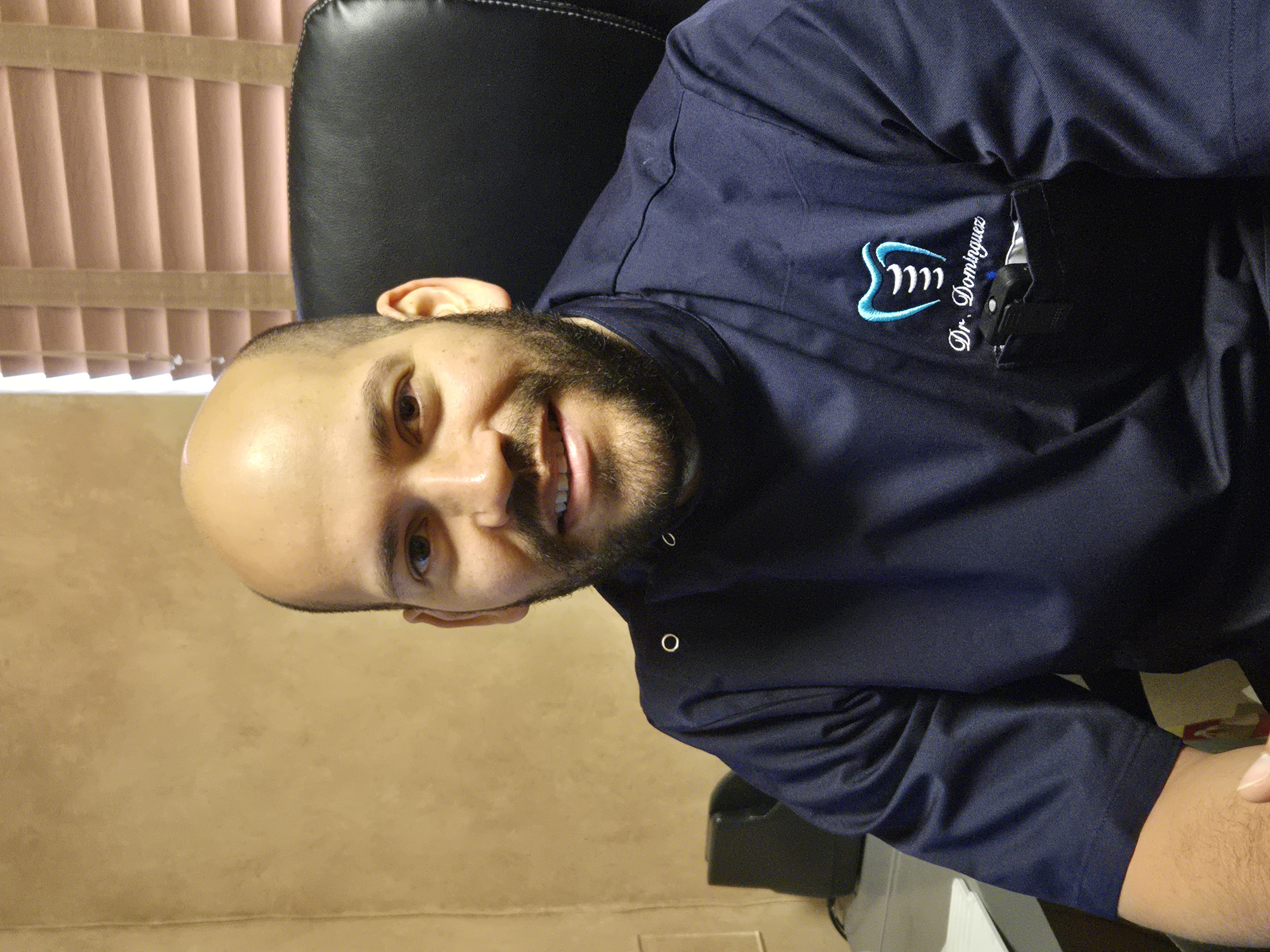
Dr. Edward Dominguez graduated from Pontificia Universidad Católica Madre y Maestra in Santiago, Dominican Republic, and practiced dentistry there before coming to the United States.
He later earned his Doctor of Dental Medicine degree from Rutgers School of Dental Medicine in Newark, New Jersey. After working as an associate dentist, he purchased Clifton Advanced Dentistry in December 2017.
Dr. Dominguez has more than 15 years of experience in cosmetic, aesthetic, smile makeover, and implant dentistry. He continues to participate in continuing education involving modern technology, materials, aesthetic treatment, and implant dentistry.
Call (973) 365-1267Learn more about clear aligner treatment and what may be involved in creating a straighter smile.
Learn More →Explore cosmetic dental options designed to improve the appearance, balance, and confidence of your smile.
Learn More →Review cosmetic treatment options available through Clifton Advanced Dentistry.
Learn More →Learn how several cosmetic or restorative treatments may be combined in a personalized smile makeover plan.
Learn More →Get answers to common questions about smile makeover candidacy, treatment planning, and available options.
Learn More →Learn how veneers may improve the shape, color, size, or appearance of selected teeth.
Learn More →These answers provide general educational information. A personal evaluation is required before any treatment recommendation can be made.
Neither option is universally better. Invisalign may appeal to patients who prefer removable, less noticeable aligners. Traditional braces may be recommended when more complex or highly controlled tooth movement is required. The appropriate choice depends on the individual case.
Invisalign may be able to improve many cases involving crooked, crowded, rotated, or spaced teeth. The severity and type of movement needed determine whether clear aligners are an appropriate option.
Invisalign may be used for certain overbite concerns, but the severity of the bite problem and the required movement must be evaluated. Some bite concerns may require a different treatment approach.
Invisalign aligners are generally worn for most of the day and night and removed mainly for eating, drinking beverages other than water, brushing, and flossing. Patients should follow the specific instructions provided by their treating dentist.
Aligners are normally removed before eating. Patients should follow instructions regarding beverages and should clean their teeth and aligners as directed before reinserting them.
Invisalign aligners can be removed, allowing patients to brush and floss without brackets and wires. The aligners also need to be cleaned. Braces require careful brushing and flossing around the fixed appliances.
Patients may experience pressure or temporary tenderness, especially when beginning a new aligner. This is associated with the controlled movement of the teeth. Experiences vary.
Retention is commonly needed after orthodontic tooth movement to help maintain the new positions. The type and schedule of retainer use depend on the patient's treatment plan.
A consultation is needed to evaluate your teeth, gums, bite, desired changes, and the complexity of the required movement. Dr. Dominguez can then explain whether Invisalign appears appropriate or whether another approach should be considered.
Schedule an evaluation with Dr. Edward Dominguez at Clifton Advanced Dentistry to discuss your alignment concerns, treatment goals, and clear aligner options.